
THE PAINTER
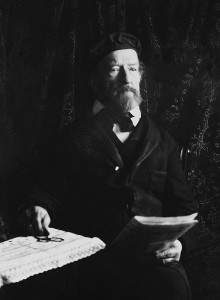
Mauritius August Seidel was born on October 5, 1820, as the third son of Friedrich Jakob Seidl, a royal general postal administration auditor, who was in his second marriage to Eleonore, née Büchsenschütz. He received his first systematic drawing instruction at the age of ten at the “Latin School” from the royal drawing teacher Franz Xaver Kleiber, who continued to teach him until 1836 at the Royal Old Gymnasium (later the Wilhelmsgymnasium).
On November 2, 1836, August Seidel enrolled at the Academy of Fine Arts, where he is documented until 1838. In the same year, he joined the Munich Art Association, exhibited his first painting, and achieved early success: the jury, under Carl Rottmann, purchased Seidel’s debut work for 110 gulden for a lottery in February 1839.
The years leading up to his journey to Tyrol and Northern Italy with Friedrich Voltz (1845) can likely still be considered an extended period of training. Presumably until the mid-1840s, and perhaps even longer, Seidel and other artists of his generation associated with the Zimmermann brothers, who, centered around their eldest, Albert, operated a kind of “open-air academy” for landscape painters around Polling and Eberfing. This artists’ colony, the inspiration he gained there, and the connections he formed had a lasting influence on Seidel’s development.
Between 1841 and 1849, as Dutch influences competed in Seidel’s work with those of Albert Zimmermann, Christian Morgenstern, and Carl Rottmann, he experienced his breakthrough as an artist. By 1849, he had established himself in nearly all major art association exhibitions across the German Confederation, Austria, and Switzerland as lucrative markets for his work. The prices for his paintings increased, acquisitions became more frequent and eventually the norm, his formats grew in scale, and he refined his technique. During this period, Seidel also formed personal connections with the elite circle of Munich landscape painters. The 1850s can be regarded as his most brilliant period; technically, Seidel reached the height of his artistic production, driven by a booming market for his large-format exhibition paintings. August Seidel’s “years of glory” were marked by both highs and setbacks: in 1852 and 1853, he was elected to the administrative committee of the Munich Art Association; in 1855, his mother passed away; in 1859, he married the Protestant Barbara Burkas, a penniless innkeeper’s daughter from Ansbach. On December 4, 1860, the Seidels’ first daughter, Frieda, was born. She was followed by their daughter Anna on April 30, 1866, and finally their son Franz Heinrich on November 29, 1868.